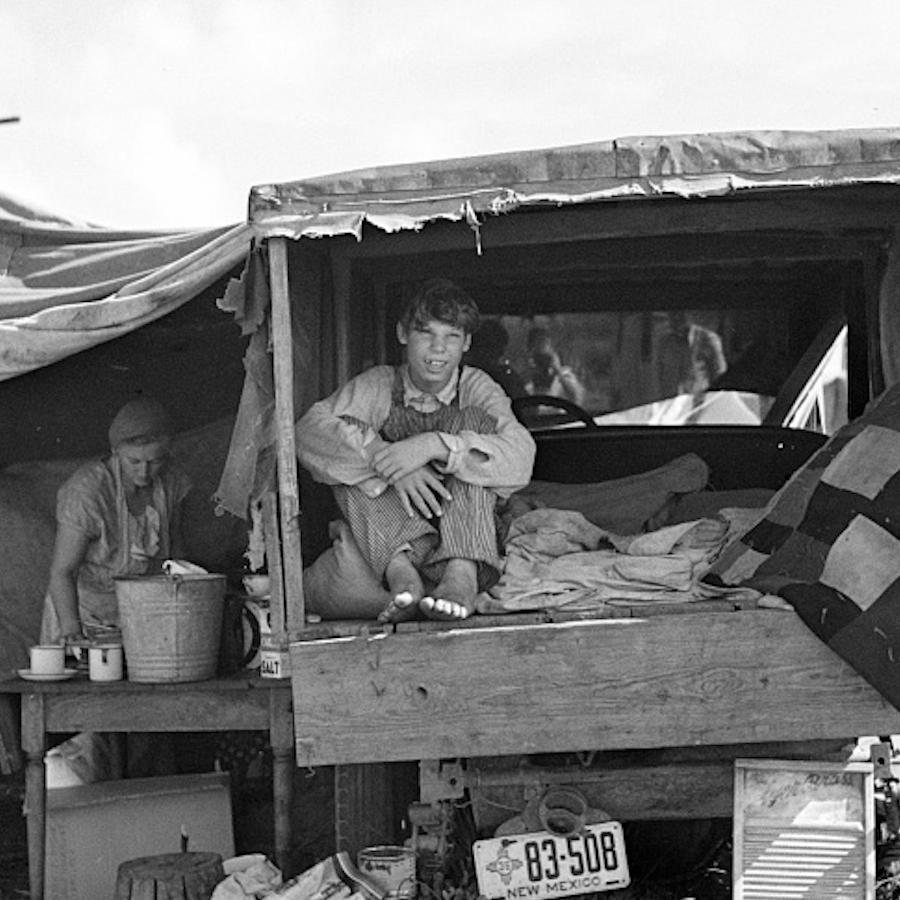
During the Great Depression, many people lost everything. Most could not afford to buy food for their families. Poverty became the way of life. Everyone worked hard to save and stretch every piece of food they had.
Since people were unable to shop, businesses lost money too. Some closed completely. And at the same time, drought spread to many states — farms dried up, crops died, and animals perished.
To cut costs, extended families crowded together in tiny homes or tents. People repaired old shoes instead of buying new ones. Mothers cut hair at home. Families played board games and listened to the radio together. While this time was not wealthy, being stuck at home allowed families to bond and learn new skills.
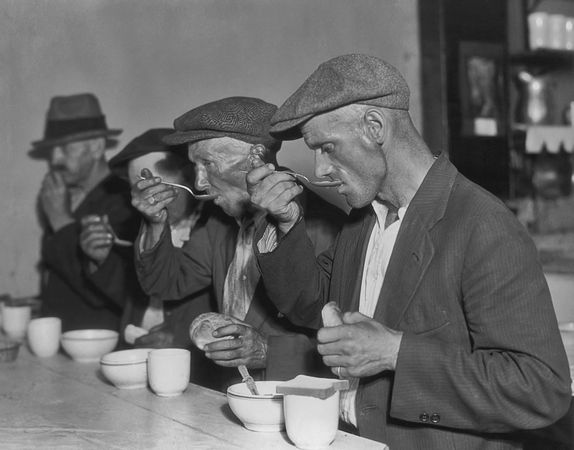
The Great Depression began on October 29, 1929 — "Black Tuesday" — when the stock market collapsed. Millions of Americans lost their jobs. More than one-third of the nation's banks closed. Many families lost their homes and shantytowns appeared across the country.
In the 1920s the economy appeared to be booming, but it was largely built on credit. When the stock market crashed, it took down banks, farms, and businesses along with it.
President Franklin Delano Roosevelt created the New Deal — a series of economic reforms to help banks, farmers, minorities, and the poor. It worked, and America slowly pulled out of the Great Depression.
"Great Depression." Gale Elementary Online Collection, Gale, a Cengage Company, 2020. Gale In Context: Elementary, link.gale.com/apps/doc/ZCZQTW483724197/ITKE?u=tel_s_tsla&sid=ITKE&xid=e882da58. Accessed 18 Feb. 2021.