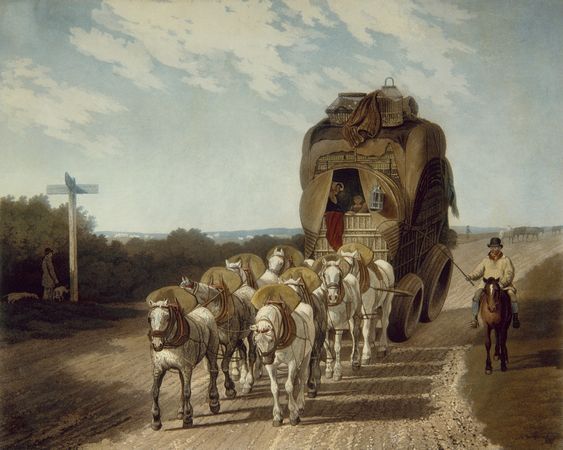
The daily life of people living on the frontier was filled with hard work and difficulties. The entire family needed to work to survive — waking with the sunlight and working until sundown.
Farmers built barns and cabins from logs, plowed fields with horses or oxen, scattered seed, and dragged dirt over the seeds.
Women made soap, spun wool into yarn, tended a garden, and sewed and repaired the family's clothes.
Even children as young as four or five worked — fetching water, watching the fire, milking the dairy cow, and churning butter.
Some children attended a one-room schoolhouse with one teacher for all grades. They used slates instead of paper, attending in winter and summer, staying home during planting and harvest seasons.
Pioneers occasionally gathered for dances and picnics. Children played outdoor games and girls made their own dolls since store-bought toys were rare.
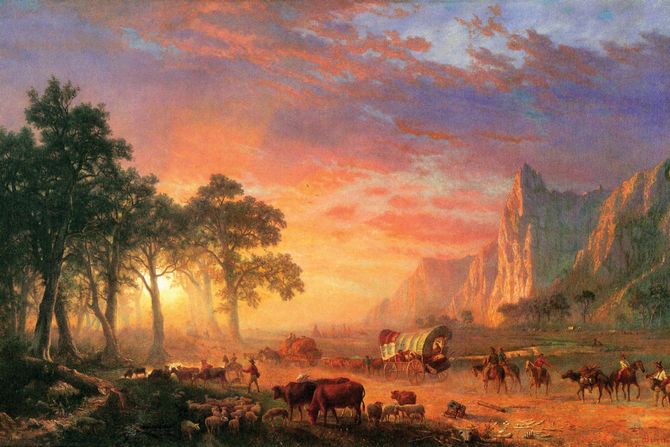
In the 19th century, many Americans left the crowded, expensive East Coast to move west where land was cheaper. People who made this journey were called pioneers. They traveled in large groups of covered wagons on a dangerous journey.
Between 1840 and 1870, more than 300,000 pioneers traveled westward. Once they arrived, they built homes and small towns. As railroads spread west, travel became easier and pioneer towns grew quickly.
The pioneers often treated Native Americans badly, taking their land and forcing them onto reservations.
Ducksters. "History: Daily Life on the Frontier." Ducksters, TSI, www.ducksters.com. Accessed 18 Feb. 2021. "Trails West." Gale Elementary Online Collection, Gale, 2020. Gale In Context: Elementary. Accessed 18 Feb. 2021.