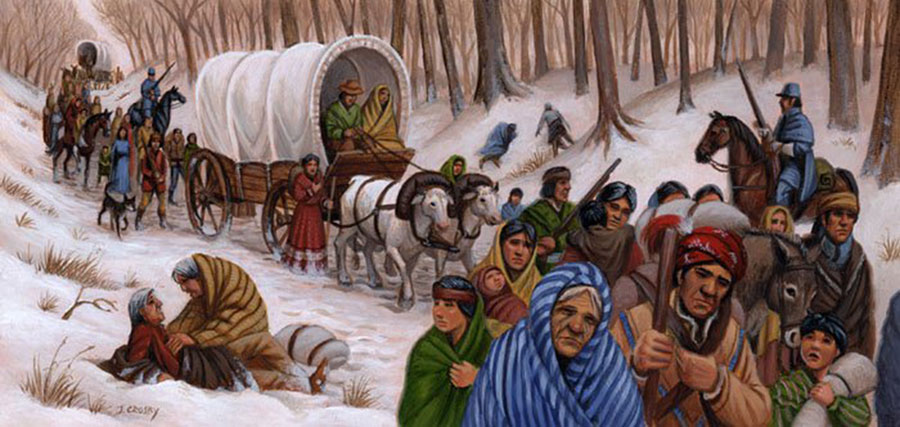
Life for the Native Americans during the removal was extremely difficult. The oldest, youngest, and sickest rode in wagons while able-bodied adults walked at gunpoint. Those deemed "too ill" were left behind to die.
Some had no shoes; those who did wore moccasins made of deer hide. Most had no time to grab blankets or extra clothing when removed from their homes.
Food was scarce — often only salt pork and flour. Adults well enough to hunt would search for animals, but freezing temperatures made hunting impossible as the trails grew longer.
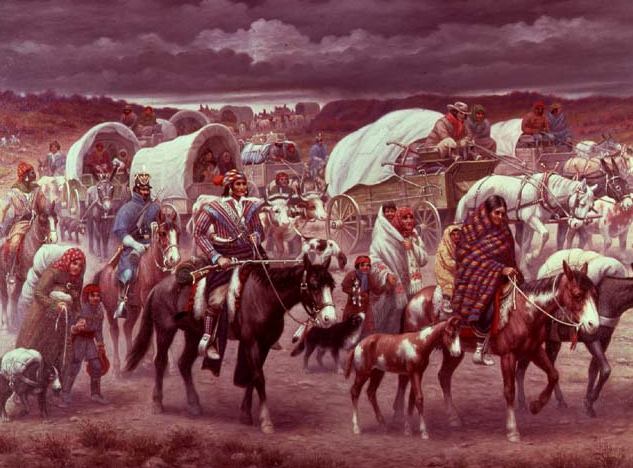
The Trail of Tears was the forced movement of Native Americans from 1836–1839. More than 100,000 Native Americans had to leave their homes in the South and march thousands of miles to Oklahoma. About 15,000 died along the way.
President Jackson signed the Indian Removal Act in 1830. The Cherokee refused to leave and fought it in court — but President Van Buren sent soldiers to remove them by force. Men, women, and children were taken from their homes at gunpoint and forced to march over mountains without enough food or water.
The US government also forced the Choctaw, Chickasaw, Creek, and Seminole tribes to march. The marches ended in 1839, but the suffering left a permanent mark on American history.
"Trail of Tears." Gale Elementary Online Collection, Gale, a Cengage Company, 2020. Gale In Context: Elementary, link.gale.com/apps/doc/IFVWSP019476296/ITKE?u=tel_s_tsla&sid=ITKE&xid=d656f953. Accessed 18 Feb. 2021.